
AI BASED ADAPTIVE EV CHARGING

More vehicles.
Smarter use of power.

Support more electric vehicles with the power available at your site. AdaptCharge learns from charging patterns and continuously rebalances power as vehicles connect, disconnect or stop charging, helping optimise infrastructure and reduce charging costs.

Discuss your charging requirements
More vehicles supportedInfrastructure optimisedLower cost potential
THE ADAPTCHARGE DIFFERENCE

Charging that learns.
Power that adapts.

AdaptCharge combines learned charging patterns with continuous power rebalancing. When a vehicle connects, disconnects or stops charging, power is automatically redistributed across active vehicles within the site's available power limit.

BASIC LOAD BALANCING · QUEUE BASED

Fixed allocation.
Additional vehicles wait.

  1. VEHICLE CONNECTSCheck for an available charging slot
  2. WHEN CAPACITY IS OCCUPIEDKeep additional vehicles in a queue
  3. EXISTING SESSIONSKeep their allocation until a slot is released

In this queue-based setup, power is not rebalanced across all connected vehicles. Additional vehicles wait until another vehicle is removed from charging and a slot becomes available.

ADAPTCHARGE AI ADAPTIVE CHARGING

Continuous rebalancing.
Charging speeds adapt.

  1. CHARGING STATUS CHANGESA vehicle connects, disconnects or stops charging
  2. CONTINUOUS REBALANCINGReallocate available power using learned charging patterns
  3. ACTIVE VEHICLESAutomatically adjust each vehicle's charging speed

AdaptCharge continuously rebalances the power delivered to active vehicles as cars connect, disconnect or stop charging. Learned charging patterns guide allocation within the site's available power limit.

Queue-based charging waits for a slot to become available. AdaptCharge adjusts charging speeds across active vehicles, redistributing power as charging demand changes.

POWER SHARING IN PRACTICE

One 20 kW limit. A changing number of cars.

This example shows how available power can be shared as more cars connect. Actual per-vehicle allocations can vary with learned charging patterns and current demand.

SITE POWER LIMIT20 kW

Available power for EV charging

Power rebalances as vehicles connect, disconnect or stop charging

2 cars connected

7 kWper car

3 cars connected

6.6 kWper car

4 cars connected

5 kWper car

5 cars connected

4 kWper car

6 cars connected

3.3 kWper car

Example: each car can charge at up to 7 kW. With two cars connected, each receives 7 kW: 14 kW in total, with 6 kW still available. As more cars connect, the power per car reduces to stay within the 20 kW site limit. The 6.6 kW and 3.3 kW figures are approximate.

More cars connected. The same 20 kW power limit. Intelligent power sharing helps extend charging access while making better use of the existing electrical infrastructure.

Illustrative example. Actual charging power depends on vehicle and charger limits, available site capacity and vehicle demand.

HOW IT WORKS

Available power.
Intelligently allocated.

01

Learn charging patterns

Learn from charging patterns to inform how available power is allocated across vehicles.

02

Allocate within site limits

Combine learned charging patterns with current demand to guide power allocation within the available site capacity.

03

Continuously rebalance power

Automatically adjust charging speeds across active vehicles when a car connects, disconnects or stops charging.

VALUE FOR YOUR SITE

Better use of infrastructure.
Better value from charging.

More vehicles can charge

Extend charging access to more vehicles by coordinating how available capacity is shared across the site.

Lower infrastructure costs

Make better use of the electrical connection and charging infrastructure, with less reliance on oversized capacity provision.

More affordable charging

Avoiding unnecessary infrastructure expenditure can help reduce the costs recovered through charging tariffs.

The number of vehicles supported and potential savings depend on site capacity, vehicle energy needs, charging windows, electricity tariffs and project design.

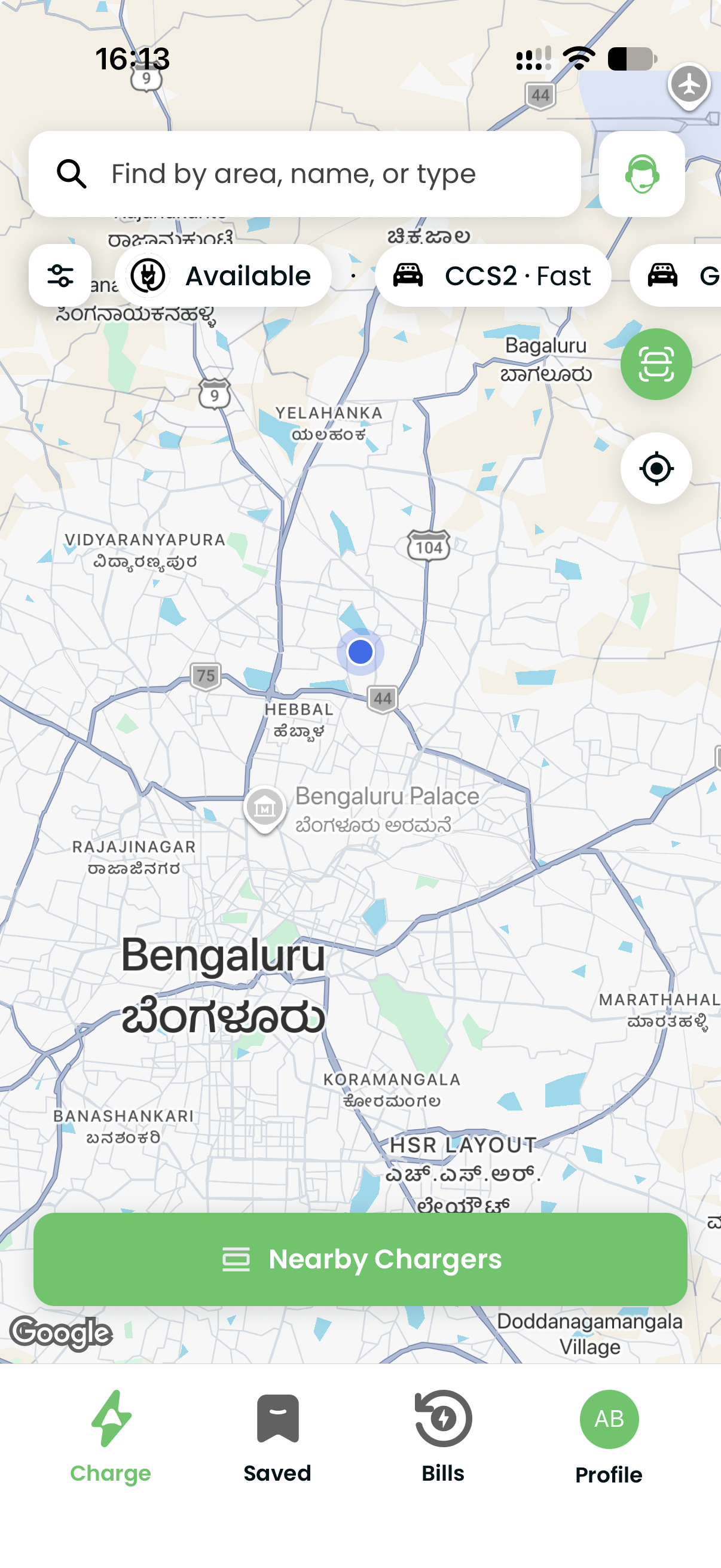
AdaptCharge app showing the Bengaluru map, charger filters and Nearby Chargers button
THE ADAPTCHARGE APP

Your charging experience.
In your hands.

Access the AdaptCharge EV Charging App from your phone. Use the universal download link to open the appropriate app store.

Download on the App Store Get it on Google Play

How many more vehicles could your site support?

Let's assess your available power, charging needs and energy optimisation opportunities to help manage infrastructure CAPEX and ongoing charging OPEX.

Discuss adaptive charging